


Searching for the best Polkadot wallet? Choosing the right wallet is essential for securely storing DOT, staking tokens, managing parachain assets, and interacting with decentralized applications across the Polkadot ecosystem.
Polkadot is a blockchain network designed to enable interoperability between different blockchains, allowing them to exchange data and assets more efficiently. Instead of operating as a single chain, Polkadot connects multiple specialized blockchains known as parachains, creating a scalable and flexible multi-chain environment.
The native cryptocurrency of the network is DOT, which is used for staking, governance participation, and securing the network. DOT holders can nominate validators, vote on protocol upgrades, and participate in the broader Polkadot ecosystem.
As the ecosystem continues to grow, many decentralized applications, DeFi protocols, and NFT projects are being built across Polkadot parachains. To interact with these services safely, users need a reliable wallet that supports staking, governance, parachain tokens, and secure private key management.
In this guide, we review the best Polkadot wallets for 2026, including hardware wallets, browser extensions, and mobile apps. Whether you want maximum security, seamless dApp connectivity, or an easy way to stake DOT, these wallets provide the tools needed to manage your assets safely.
Can you use the hardware wallets for Polkadot DOT?
Yes. Hardware wallets like the Ledger Nano X, Ledger Flex, and Ledger Stax offer the highest level of protection for DOT holders. All Ledger devices support direct staking through Ledger Live and can be securely connected to software wallets like Talisman for accessing Polkadot dApps, managing parachain assets, and participating in governance.
If you’re staking DOT or storing significant amounts, using a Ledger hardware wallet is strongly recommended to keep your private keys offline and safe from online threats.
Best Polkadot Wallets
- Ledger Hardware Wallets – Best Hardware Wallets for DOT Security & Staking
- Talisman Wallet – Best Browser Wallet for Polkadot dApps & Governance
- Nova Wallet – Best Mobile Wallet for Polkadot Staking & dApp Access
- SubWallet – Best Cross-Chain Wallet for Polkadot Parachain dApps
- Fearless – Best Wallet for Polkadot Staking & Crowdloans
- Guarda Wallet – Best Multi-Platform Wallet for DOT & Multi-Crypto Management
What is the best Polkadot (DOT) wallet?
Below is a curated list of the best Polkadot wallets for 2026, including hardware wallets, browser extensions, and mobile apps for storing, staking, and managing DOT.
1. Ledger Hardware Wallets – Best Hardware Wallet for DOT Security & Staking
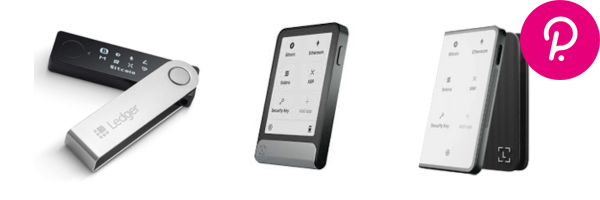
Ledger hardware wallets provide one of the most secure ways to store and manage Polkadot (DOT). Devices like Ledger Nano X, Ledger Flex, and Ledger Stax keep private keys offline inside a secure chip, helping protect assets from phishing attacks, malware, and unauthorized access.
Ledger wallets integrate with Ledger Live, where users can manage DOT accounts, send and receive tokens, and monitor their portfolio. For interacting with the Polkadot ecosystem, Ledger devices can also connect to compatible wallets such as Talisman, enabling access to dApps, staking tools, and governance features.
Because transactions must be physically confirmed on the device, Ledger wallets offer an additional security layer compared to software wallets. This makes them a common choice for long-term holders and users securing larger DOT balances.
- Ledger Nano X — $149
A proven, battle-tested hardware wallet trusted by millions of users worldwide. - Ledger Flex — $249
A foldable, modern wallet combining portability with robust security for your DOT and parachain assets. - Ledger Stax — $399
Ledger’s flagship wallet with an e-ink touchscreen, premium materials, and an intuitive interface—ideal for serious DOT investors.
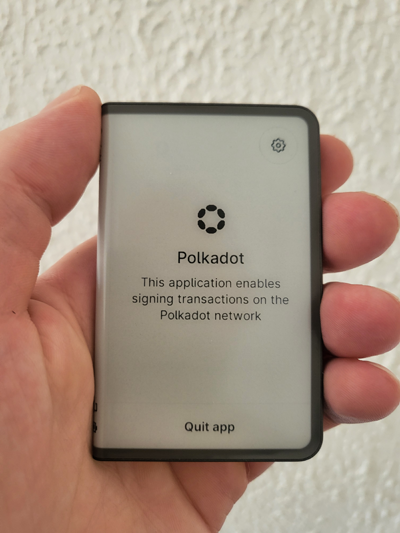
If you’re serious about investing in Polkadot and participating in staking or governance, a Ledger hardware wallet is by far the best way to do it. For the most premium experience, Ledger Stax is highly recommended.
2. Talisman Wallet – Best Browser Wallet for Polkadot dApps & Governance

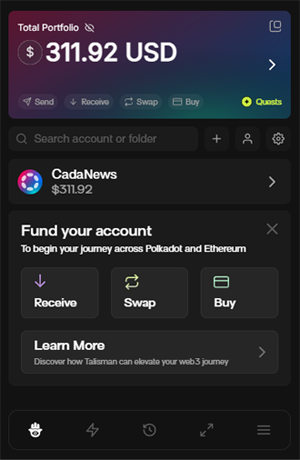
Talisman Wallet is a browser extension wallet designed specifically for the Polkadot and Kusama ecosystems. It allows users to store DOT, manage parachain tokens, stake assets, and connect directly to decentralized applications across the network.
The wallet provides a streamlined interface that makes it easier to explore the growing Polkadot ecosystem, including DeFi platforms, NFT marketplaces, and governance tools. Talisman also supports Ledger hardware wallet integration, allowing users to combine browser convenience with hardware-level security.
With strong support for Polkadot parachains and an intuitive interface, Talisman has become one of the most widely used browser wallets for Polkadot users.
Price: Free
3. Nova Wallet – Best Mobile Wallet for Polkadot Staking & dApp Access

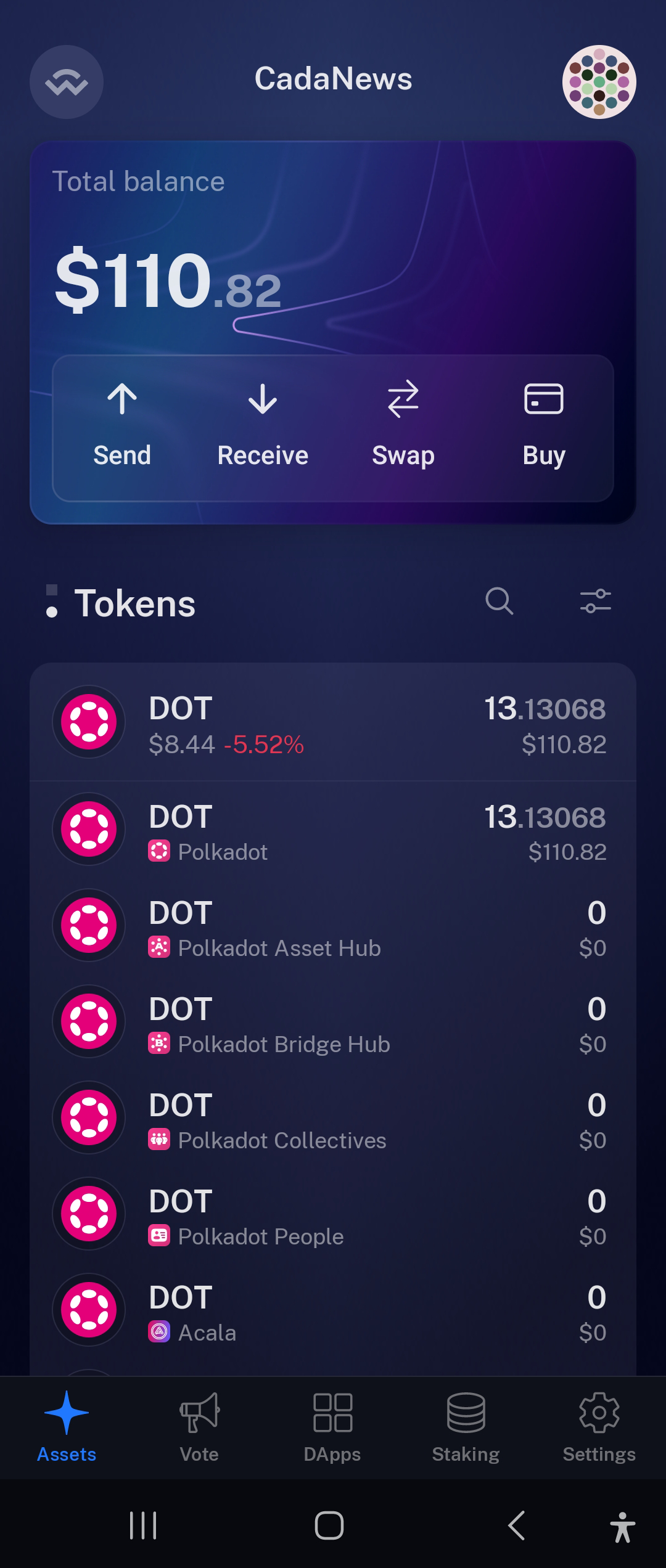
Nova Wallet is a mobile wallet built specifically for the Polkadot ecosystem, offering tools for staking, governance participation, and parachain asset management directly from a smartphone.
The wallet allows DOT holders to nominate validators, track staking rewards, and vote on governance proposals through an easy-to-use interface. Nova also includes portfolio tracking and support for multiple parachain tokens, making it a practical option for users who want to interact with the ecosystem while on the move.
Because of its strong focus on usability and ecosystem integration, Nova Wallet has become a popular choice among mobile-first Polkadot users.
Price: Free
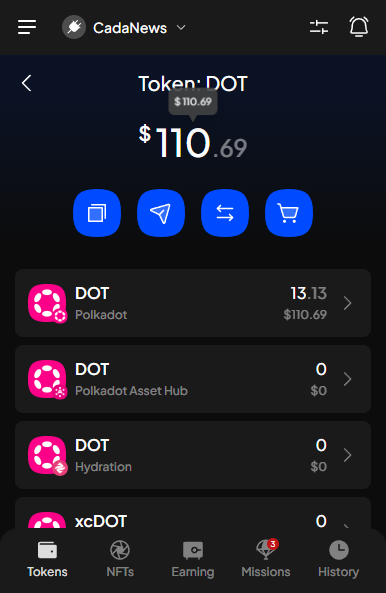
4. SubWallet – Best Cross-Chain Wallet for Polkadot Parachain dApps

SubWallet is a multi-platform wallet available as both a browser extension and mobile application. It supports Polkadot, Kusama, and multiple parachain networks, allowing users to manage tokens, NFTs, and staking activities from a single interface.
The wallet is designed to simplify cross-chain interaction within the Polkadot ecosystem. Users can connect to decentralized applications, manage parachain assets, and track their DOT staking rewards directly within the wallet.
With its support for multiple platforms and strong integration with the Polkadot ecosystem, SubWallet is often chosen by users looking for flexible access to dApps and cross-chain functionality.
Price: Free
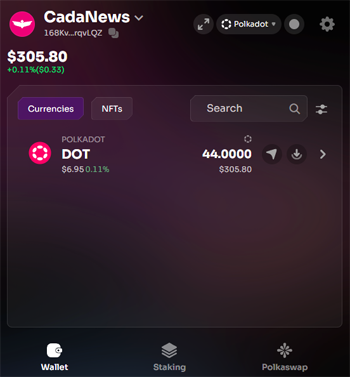
5. Fearless Wallet – Best Wallet for Polkadot Staking & Crowdloans

Fearless Wallet is a mobile-focused Polkadot wallet designed to provide access to staking, governance, and token management features. It supports DOT and other Polkadot ecosystem tokens while offering a clean interface suitable for both beginners and experienced users.
The wallet allows users to stake DOT, track rewards, participate in governance voting, and explore parachain projects directly from the app. Fearless also includes portfolio tracking and token swap functionality for certain assets within the ecosystem.
With its emphasis on simplicity and ecosystem integration, Fearless Wallet is a convenient option for users who want to manage their Polkadot assets from a mobile device.
Price: Free
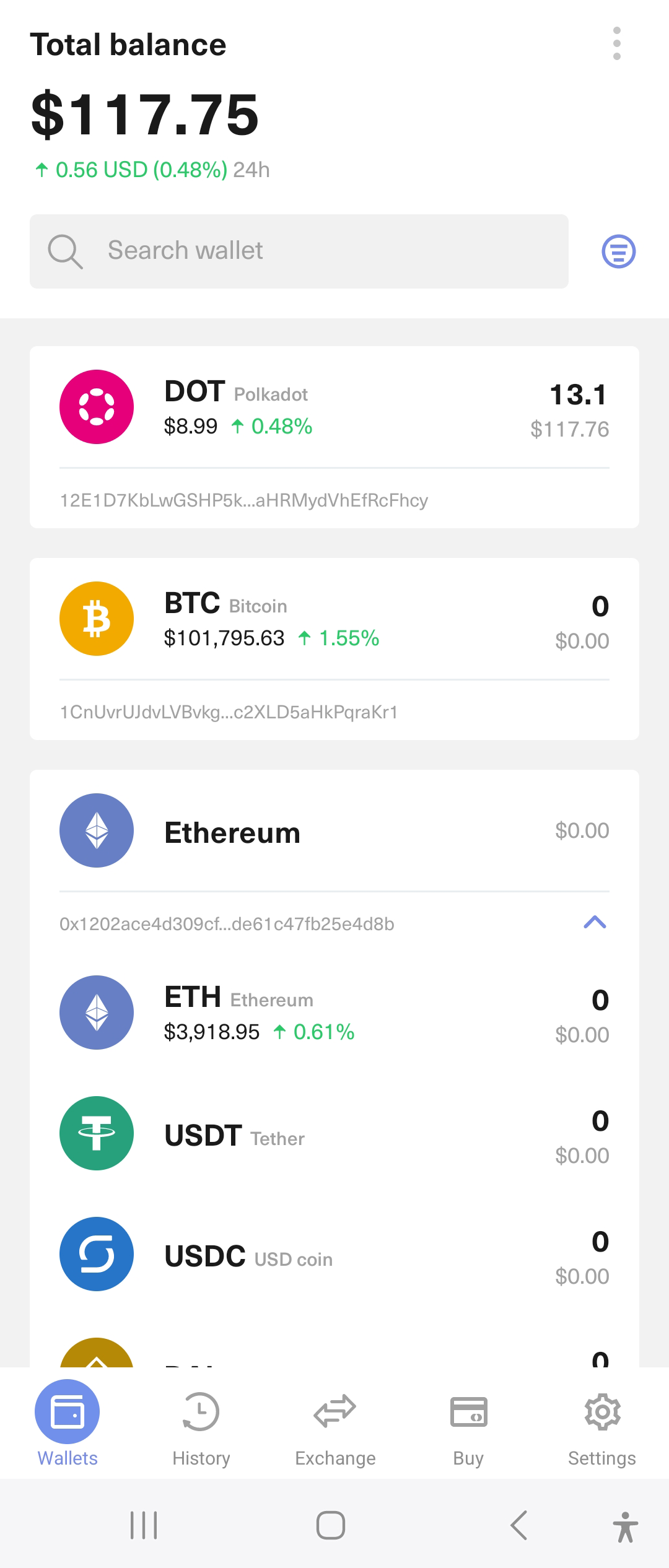
6. Guarda Wallet – Best Multi-Platform Wallet for DOT & Multi-Crypto Management

Guarda Wallet is a multi-platform, non-custodial wallet that supports Polkadot along with thousands of other cryptocurrencies. It is available on desktop, mobile, and web platforms, allowing users to access their assets across multiple devices.
The wallet provides tools for storing DOT, managing tokens, and exchanging assets through its built-in exchange service. Because it supports a wide range of cryptocurrencies, Guarda is often used by investors who want to manage multiple digital assets within a single wallet interface.
While it is not exclusively focused on the Polkadot ecosystem, Guarda remains a flexible option for users seeking a multi-currency wallet with DOT support.
Price: Free
What a Good Polkadot (DOT) Wallet Should Have

Choosing a Polkadot wallet is not just about storing DOT. The right wallet should allow you to secure your private keys, stake efficiently, participate in governance, and interact with parachains and dApps — all without compromising security.
Because Polkadot is designed around interoperability and parachain architecture, a basic wallet is not enough. A strong DOT wallet must support ecosystem-level functionality while maintaining high security standards.
Here’s what truly matters in 2026:
1. Non-Custodial Key Control
A good Polkadot wallet should always be non-custodial, meaning you control the private keys and recovery phrase. If you don’t control the keys, you don’t fully control your DOT.
This is essential for long-term holders and serious investors.
2. Hardware Wallet Integration
For maximum security, the wallet should integrate with hardware devices like Ledger Nano X, Ledger Flex, or Ledger Stax.
Hardware integration ensures:
- Private keys remain offline
- Transactions must be physically confirmed
- Protection against phishing and malware
This is especially important for users staking significant amounts of DOT.
3. Native DOT Staking Support
Polkadot is built around staking and validator nomination. A proper wallet should allow you to:
- Nominate validators
- Monitor staking rewards
- Track unbonding periods
- Manage multiple staking accounts
Without staking functionality, you’re not fully utilizing DOT’s design.
4. Governance Participation
Polkadot holders can vote on network upgrades and proposals. A strong wallet should support:
- Referenda voting
- Delegation options
- Governance dashboards
Active governance is a core part of the Polkadot ecosystem.
5. Parachain & Token Compatibility
DOT is just the base layer. Many assets live on Polkadot parachains.
A quality wallet should support:
- Parachain tokens
- Cross-chain transfers
- NFT visibility where applicable
This ensures full ecosystem access rather than basic storage only.
6. Reliable dApp Connectivity
Polkadot DeFi, staking platforms, NFT marketplaces, and crowdloans require seamless wallet connections.
Look for wallets that offer:
- Browser extension access
- Secure signing prompts
- Clear transaction previews
This reduces the risk of signing malicious transactions.
7. Multi-Platform Availability
Depending on your usage style, a wallet should offer:
- Desktop support
- Browser extension access
- Mobile apps (Android & iOS)
Active users often prefer hot wallets for interaction and hardware wallets for long-term storage.
8. Active Development & Security Updates
Polkadot evolves quickly. Your wallet should too.
Choose wallets that:
- Receive regular updates
- Adapt to network upgrades
- Maintain strong community support
Dormant wallets become security risks over time.
Understanding Polkadot Wallet Types
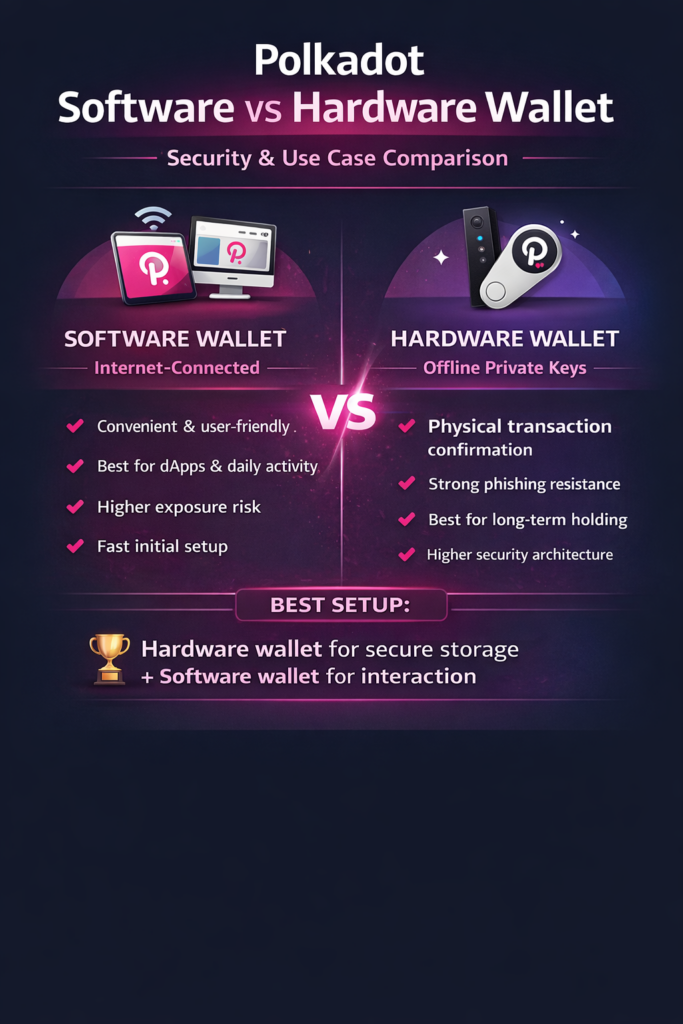
Before choosing a Polkadot wallet, it’s important to understand how wallets are structured. DOT wallets are generally divided into two main categories based on how they store private keys: software wallets and hardware wallets.
Both allow you to manage DOT, stake, and interact with the ecosystem — but they differ significantly in security architecture and risk exposure.
Your choice should depend on how much DOT you hold, how actively you use the Polkadot network, and how much security you require.
Software Wallets: Flexible Access to the Polkadot Ecosystem
Software wallets run on internet-connected devices such as browsers, smartphones, or desktops. They are designed for users who frequently interact with Polkadot dApps, governance, staking, and parachain tokens.
Software wallets typically come as:
- Browser extensions
- Mobile apps (Android & iOS)
- Desktop applications
They offer:
- Fast access to DOT balances
- Seamless dApp connectivity
- Easy validator nomination
- Governance participation
- NFT and parachain asset management
Because software wallets operate on connected devices, they are more exposed to phishing attempts, malicious links, or compromised systems. For active ecosystem use, however, they remain highly practical.
Software wallets are ideal for operational balances and regular interaction.
Hardware Wallets: Offline Security for Long-Term Protection
Hardware wallets store private keys offline within a secure physical device. Transactions must be confirmed directly on the device itself, which significantly reduces the risk of remote attacks.
They are especially suitable for:
- Long-term DOT holders
- Larger portfolios
- Serious stakers
- Investors prioritizing security
Even when interacting with dApps or browser wallets, hardware wallets keep private keys isolated from your computer or phone.
For investors focused on capital preservation, hardware wallets provide the strongest security foundation.
Should You Use a Hardware Wallet for Polkadot (DOT)?
While both wallet types serve important roles, many DOT holders eventually ask whether a hardware wallet is necessary.
The answer depends on how you use Polkadot and the size of your investment.
When a Software Wallet Is Sufficient
A software wallet may be appropriate if:
- You hold a smaller amount of DOT
- You frequently interact with dApps
- You actively participate in governance
- You move tokens regularly
Software wallets prioritize convenience and accessibility, making them ideal for daily ecosystem participation.
When a Hardware Wallet Is Recommended
A hardware wallet becomes strongly recommended if:
- DOT represents a meaningful part of your portfolio
- You are staking significant amounts
- You plan to hold long term
- You want stronger resistance to phishing and malware
- You prefer physical transaction confirmation
Hardware wallets allow you to stake, connect to compatible software wallets, and participate in governance — while keeping your private keys offline at all times.
The Balanced Strategy
Many experienced Polkadot users combine both:
- Hardware wallet for secure storage and staking
- Software wallet for dApp interaction and daily activity
This hybrid approach delivers flexibility without compromising security.
Final Perspective
If DOT is a serious long-term investment, relying solely on a software wallet may not provide the level of protection you expect.
For most investors, combining offline key storage with ecosystem accessibility offers the most secure and practical setup.