

Looking for the best Polygon (POL) wallet in 2026? Whether you’re storing POL long-term, managing NFTs, or interacting with Polygon dApps, choosing the right wallet is essential for both security and ease of use.
Polygon is a scaling ecosystem built for Ethereum, designed to offer faster transactions and significantly lower fees while supporting smart contracts, DeFi platforms, NFTs, and Web3 applications. Thanks to its efficiency and growing adoption, it has become one of the most widely used networks for users who want Ethereum compatibility without high gas costs.
To interact with the network, you’ll need a reliable self-custodial Polygon wallet. These wallets give you full control over your private keys while allowing you to store POL, manage tokens, connect to dApps, and explore the broader Polygon ecosystem.
In this guide, we focus on the best software wallets for Polygon, ideal for everyday use, DeFi, and NFTs. If you want to keep your crypto 100% safe check our best hardware wallets, for Polygon and other networks and support over 10.000 digital assets any Ledger device will do great.
Best Polygon Wallets in 2026
- Trust Wallet – Best mobile wallet for Polygon dApps & NFTs
- Rabby Wallet – Best Polygon wallet for DeFi users
- Zerion – Best Polygon wallet for portfolio tracking, DeFi & NFTs
- NuFi – Best cross-platform wallet for Polygon
- Exodus – Best multi-asset wallet for Polygon
1. Trust Wallet – Best Mobile Wallet for Polygon dApps & NFTs
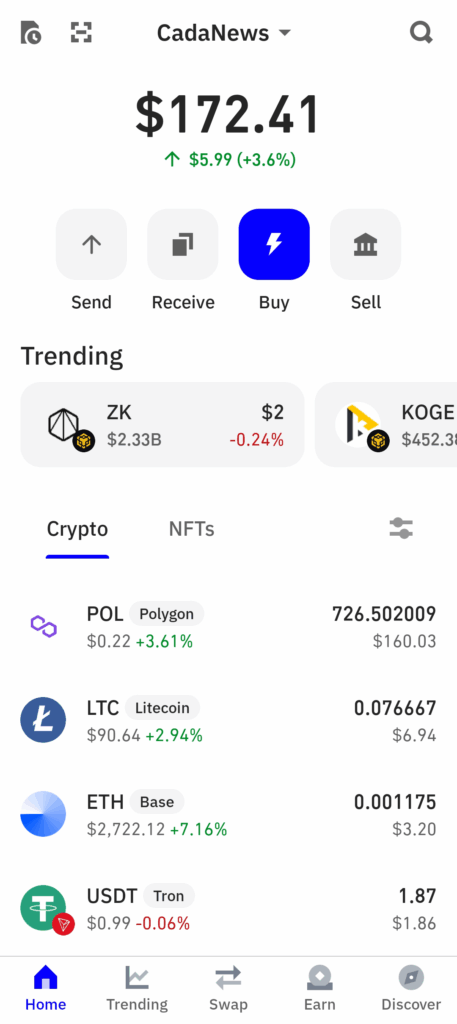
Trust Wallet is a mobile-first wallet that makes it easy to manage POL and Polygon-based tokens while accessing dApps and NFTs directly from your phone. Available on both iOS and Android, it offers a simple setup and intuitive interface suitable for beginners and experienced users alike.
Once set up, you can send, receive, and store POL, connect to Polygon dApps, and explore NFT marketplaces without needing a desktop wallet. The built-in browser and WalletConnect support make it flexible for interacting with DeFi platforms across devices.
Its biggest advantage is convenience. Everything from token management to dApp interaction happens in one place, making it ideal for everyday use.
In real-world use, Trust Wallet works best for users who want a simple and reliable mobile wallet for Polygon without dealing with complex setups.
✅ Verdict
- Best for: Everyday Polygon users and mobile-first access
- Main strength: Easy-to-use mobile interface with built-in dApp browser and strong support for Polygon tokens and NFTs
- Main drawback: Limited advanced features compared to browser wallets for DeFi power users
- Who should use it: Users who want a simple and reliable wallet for storing POL, using dApps, and managing NFTs on mobile
2. Rabby Wallet – Best Polygon wallet for DeFi users

Rabby Wallet is a browser-based wallet designed for interacting with Ethereum and EVM-compatible networks, making it a strong option for managing POL and Polygon-based assets. Developed by DeBank, it focuses on improving the Web3 experience with better transaction clarity and built-in security checks.
Unlike many traditional browser wallets, Rabby automatically detects the correct network when you interact with dApps. This means you don’t need to manually switch to Polygon, which helps reduce errors when using multiple chains or switching between DeFi platforms.
The wallet also stands out for its transaction simulation feature. Before confirming a transaction, Rabby shows what will happen — including token changes, gas fees, and potential risks. This added transparency can be especially useful when interacting with smart contracts on Polygon.
Rabby integrates smoothly with DeFi platforms, NFT marketplaces, and Web3 apps, making it a practical choice for users who frequently use decentralized applications. It also supports multiple wallets within one interface, allowing you to manage different addresses without switching extensions.
In real-world use, Rabby works best for users who are actively using Polygon DeFi, swaps, and smart contracts, rather than just holding POL.
✅ Verdict
- Best for: DeFi users and advanced Polygon interactions
- Main strength: Built-in transaction simulation and automatic network detection for safer dApp usage
- Main drawback: Browser-only wallet with no dedicated mobile app
- Who should use it: Users who actively use Polygon dApps, swaps, and smart contracts and want more control and transparency over transactions
3. Zerion –Best Polygon wallet for portfolio tracking, DeFi & NFTs

Zerion is a modern, self-custodial wallet designed for managing POL and other assets across EVM-compatible networks, including Polygon. Developed by Zerion, it focuses on giving users a clear overview of their portfolio while maintaining full access to Web3 features.
The wallet is available as both a mobile app and browser extension, allowing you to manage your assets across devices. Once connected, Zerion automatically detects and displays your tokens, NFTs, and DeFi positions on Polygon, eliminating the need to manually add assets or track them across multiple platforms.
One of its standout features is portfolio tracking. Zerion provides a detailed breakdown of your holdings, including token balances, historical performance, and activity across DeFi protocols. This makes it especially useful for users who are actively participating in the Polygon ecosystem.
Zerion also supports dApp connectivity and swaps, enabling you to interact with decentralized exchanges, NFT marketplaces, and other Web3 applications directly from the wallet. The interface is clean and intuitive, making it accessible for both beginners and more experienced users.
In real-world use, Zerion works best for users who want a visual and organized way to manage their Polygon assets, especially if they are involved in DeFi or NFTs.
✅ Verdict
- Best for: Portfolio tracking, NFTs, and multi-chain asset management
- Main strength: Clear portfolio overview with automatic tracking of tokens, DeFi positions, and NFTs on Polygon
- Main drawback: Less focused on advanced DeFi tools compared to browser-first wallets
- Who should use it: Users who want a clean and visual way to manage their Polygon assets, especially across DeFi and NFTs
4. NuFi – Best Cross-Platform Wallet for Polygon
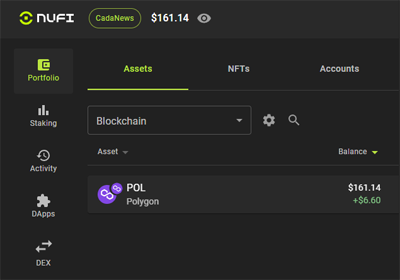
NuFi is a cross-platform wallet available as a browser extension, web wallet, and mobile app, offering a flexible way to manage POL across multiple devices. It’s designed for users who want both accessibility and full Web3 functionality in one place.
The wallet allows you to store, send, and swap POL while also connecting directly to Polygon dApps and NFT platforms. Its built-in dApp integration makes interacting with DeFi platforms smooth, without requiring additional tools or complicated setup.
NuFi also stands out for its broader multi-chain support, making it useful for users who manage assets across several ecosystems, not just Polygon.
In practice, NuFi is best for users who want a modern wallet that works seamlessly across desktop and mobile, with easy access to dApps and NFTs.
✅ Verdict
- Best for: Cross-platform access and multi-chain users
- Main strength: Works seamlessly across browser, web, and mobile with solid Polygon dApp integration
- Main drawback: Less widely adopted than more established wallets
- Who should use it: Users who want a flexible wallet that works across devices while managing Polygon and other blockchain assets
5. Exodus – Best Multi-Asset Wallet for Polygon
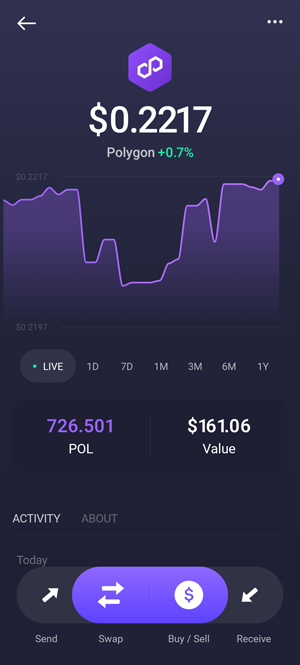
Exodus is a design-focused wallet that allows you to manage POL alongside hundreds of other cryptocurrencies in a clean and user-friendly interface. Available on desktop and mobile, it’s especially popular among users who prioritize simplicity and portfolio visibility.
The wallet makes it easy to send, receive, and swap assets directly within the app, without needing to configure networks manually. Its built-in exchange and real-time portfolio tracking make it a convenient tool for managing multiple holdings.
While Exodus is not primarily focused on Polygon dApps or NFTs, it works well for users who want a straightforward way to store and manage POL as part of a broader crypto portfolio.
In real-world use, it’s best suited for users who value ease of use and a smooth multi-asset experience over advanced Web3 features.
✅ Verdict
- Best for: Simple multi-asset portfolio management
- Main strength: Clean interface with built-in exchange and easy management of POL alongside other cryptocurrencies
- Main drawback: Limited support for Polygon dApps and advanced Web3 features
- Who should use it: Users who want an easy-to-use wallet for holding and managing POL as part of a broader crypto portfolio
Types of Polygon Wallets
Polygon (POL) wallets generally fall into two main categories, depending on how you plan to use them.
Hot Wallets
Hot wallets are connected to the internet and are ideal for daily use, DeFi, NFTs, and dApps. Wallets like Trust Wallet, Rabby, and Zerion make it easy to interact with the Polygon ecosystem, though they are more exposed to online risks.
Cold Wallets
Cold wallets are hardware devices that store your private keys offline, offering the highest level of security. Options like D’CENT and Ledger are better suited for long-term storage of POL, especially if you’re holding larger amounts.
If you want to explore wallet guides for other cryptocurrencies, visit our digital asset wallet hub on CadaNews.
FAQ
These are some of the most common questions people have about the Polygon blockchain, wallets, and POL cryptocurrency.
