

Searching for the best Hedera wallet? Choosing the right wallet is essential for securely storing HBAR, staking tokens, managing assets, and accessing decentralized applications across the Hedera ecosystem.
Hedera is a high-performance network known for its fast transactions, low fees, and enterprise-focused infrastructure. As adoption grows, more users are interacting with DeFi platforms, tokenized assets, and Web3 applications built on Hedera — making wallet choice more important than ever.
To use the network safely, you’ll need a wallet that supports non-custodial key control, native staking, and reliable dApp connectivity, while remaining simple enough for everyday use.
In this guide, we review the best Hedera Hashgraph (HBAR) wallets for 2026, focusing on options that offer a strong balance between security, usability, and ecosystem support.
We’ve intentionally excluded tools that may work with Hedera but don’t provide a smooth or reliable experience. For example, while some solutions attempt to bridge external wallets into the Hedera ecosystem, dedicated Hedera wallets remain the most practical choice for most users.
For those prioritizing maximum security, pairing a software wallet with a hardware device is a common approach. You can explore our guide to the best hardware wallets for Hedera HBAR, covering devices designed to keep private keys offline while still working seamlessly with wallets like HashPack.
Best Hedera Hashgraph Wallets
- HashPack – Best Hedera (HBAR) Wallet Overall
- Kabila Wallet – Best for Hedera Tokens & Advanced Features
- Exodus – Best Beginner Wallet for HBAR
- Atomic – Best Multi-Crypto Wallet with HBAR Support
- Edge Wallet – Simple Mobile Wallet for HBAR
1. HashPack – Best Hedera (HBAR) Wallet Overall

HashPack is the most popular non-custodial wallet built specifically for the Hedera ecosystem. It allows users to store HBAR, stake tokens, manage NFTs, and interact with dApps through a browser extension, mobile app, or web interface.
Because it is purpose-built for Hedera, HashPack offers seamless integration with DeFi platforms, NFT marketplaces, and native staking. It also supports hardware wallet connections like Ledger and D’CENT for users who want stronger security.
If you want a secure hardware setup, follow our guide on how to connect Ledger Flex to HashPack Wallet.
For most users, HashPack is the easiest and most complete way to access everything Hedera has to offer.
✅ Verdict
- Best for: All-around Hedera users
- Main strength: Seamless dApp connectivity with native staking and strong Ledger integration
- Main drawback: Can feel overwhelming for complete beginners due to the number of features
- Who should use it: Users who want one wallet for staking, dApps, and managing HBAR and ecosystem assets
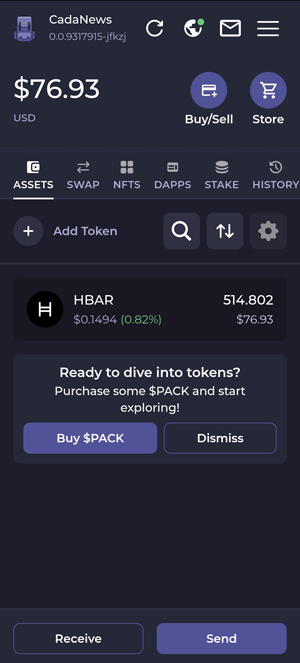
2. Kabila Wallet – Best for Hedera Tokens & Advanced Features

Kabila Wallet is a Hedera-native wallet designed for users who want more than basic storage. It supports HBAR, HTS tokens, NFTs, staking, and built-in swaps, all within a clean interface available on browser and mobile.
The wallet also includes advanced features like a dApp explorer and smart staking suggestions, helping users find better validator options and improve rewards.
Kabila is a strong choice for users who want deeper access to the Hedera ecosystem with more control over their assets.
✅ Verdict
- Best for: Users exploring Hedera tokens and advanced features
- Main strength: Rich feature set with built-in tools like swaps and HBAR staking
- Main drawback: Smaller ecosystem and less adoption compared to leading wallets like HashPack
- Who should use it: Users who want more control, additional tools, and deeper interaction with Hedera assets beyond basic wallet functionality
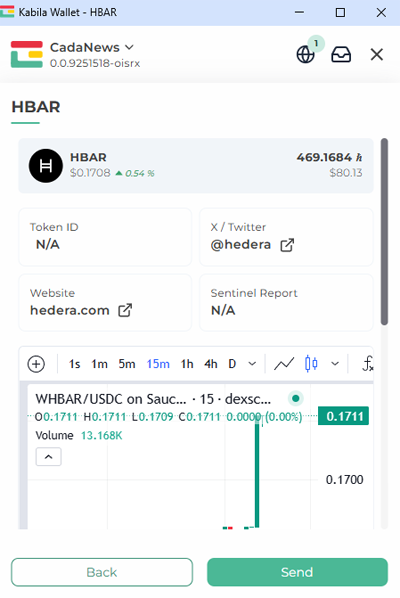
3. Exodus – Best Beginner Wallet for HBAR

Exodus is a well-designed wallet known for its ease of use and clean interface. It supports HBAR on desktop and mobile, allowing users to store, send, receive, and swap tokens without additional tools.
However, it does not support HBAR staking, NFTs, or Hedera dApps, making it more suitable for basic use cases.
Exodus works best for users who want a simple and intuitive way to manage HBAR alongside other cryptocurrencies.
✅ Verdict
- Best for: Beginners and simple HBAR storage
- Main strength: Intuitive interface with easy setup and built-in swap functionality
- Main drawback: Lacks native Hedera features like staking, dApp connectivity, and full ecosystem support
- Who should use it: Users who want a simple way to store and manage HBAR without needing advanced features
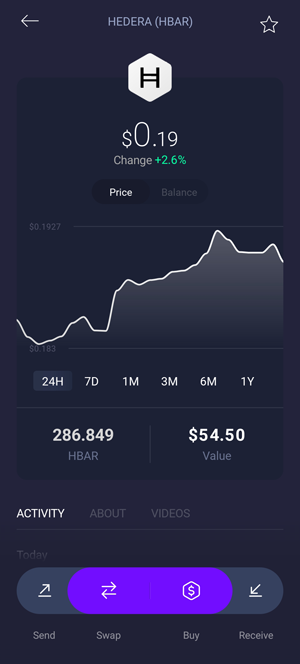
4. Atomic – Best Multi-Crypto Wallet with HBAR Support

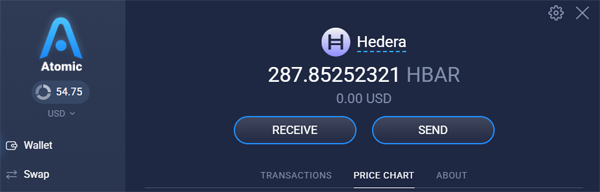
Atomic Wallet is a multi-asset wallet that supports HBAR alongside hundreds of other cryptocurrencies. It is available on desktop and mobile, making it easy to manage a diversified portfolio in one place.
While it offers basic HBAR support, it lacks deeper Hedera features like NFTs and dApp connectivity, which limits its usefulness for active users.
Atomic is best suited for users who want simple storage and multi-asset management, rather than full Hedera ecosystem access.
✅ Verdict
- Best for: Multi-crypto users with HBAR exposure
- Main strength: Supports a wide range of cryptocurrencies in one wallet
- Main drawback: Limited Hedera-specific features and no dApp connectivity
- Who should use it: Users who want to manage HBAR alongside other assets without focusing on the Hedera ecosystem
5. Edge Wallet – Simple Mobile Wallet for HBAR

Edge Wallet is a mobile-only wallet that supports HBAR but offers limited functionality. Its setup process differs from most wallets and can feel less intuitive for users familiar with seed phrase systems.
While it allows basic transactions, it does not support staking, NFTs, or dApp connectivity, which makes it less practical for most Hedera users.
Edge is better suited for simple mobile use rather than full participation in the Hedera ecosystem.
✅ Verdict
- Best for: Simple mobile HBAR storage
- Main strength: Easy-to-use mobile interface with quick setup
- Main drawback: No staking, dApp connectivity, or deeper Hedera ecosystem support
- Who should use it: Users who only need a basic mobile wallet for sending and receiving HBAR
What a Good Hedera Hashgraph (HBAR) Wallet Should Have
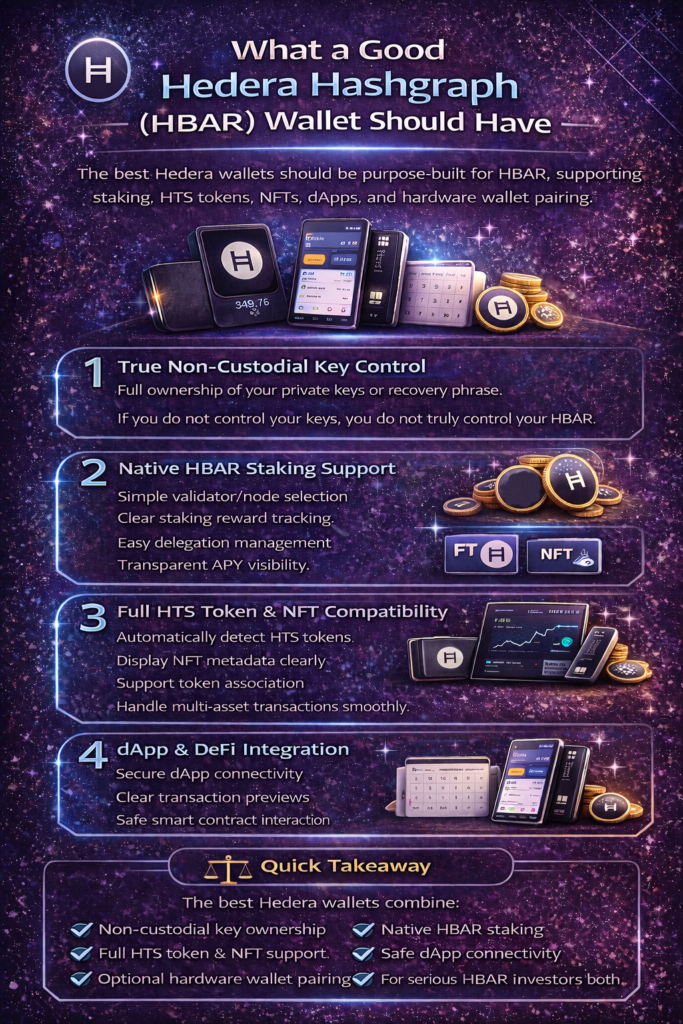
Choosing a Hedera wallet is not just about storing HBAR. The right wallet should allow you to secure your private keys, stake efficiently, manage tokens, and interact with dApps — all without compromising security.
Because Hedera uses its own architecture, not all wallets offer the same level of support. A strong wallet should include:
- Non-custodial key control – You fully control your private keys
- Native HBAR staking – Easy delegation and reward tracking
- HTS token support – Proper handling of Hedera tokens and assets
- Reliable dApp connectivity – Secure interaction with DeFi and applications
- Hardware wallet compatibility – Option to keep private keys offline
- Multi-platform access – Available on mobile, browser, or both
A wallet that covers these areas allows you to fully use the Hedera ecosystem — not just store HBAR.
